JP-5 Fuel, NATO F-44 naval aviation fuel
JP-5 fuel has the highest flash point of any standard jet fuel, engineered for carrier flight deck safety, enclosed-ship storage and Marine Corps aviation ashore.
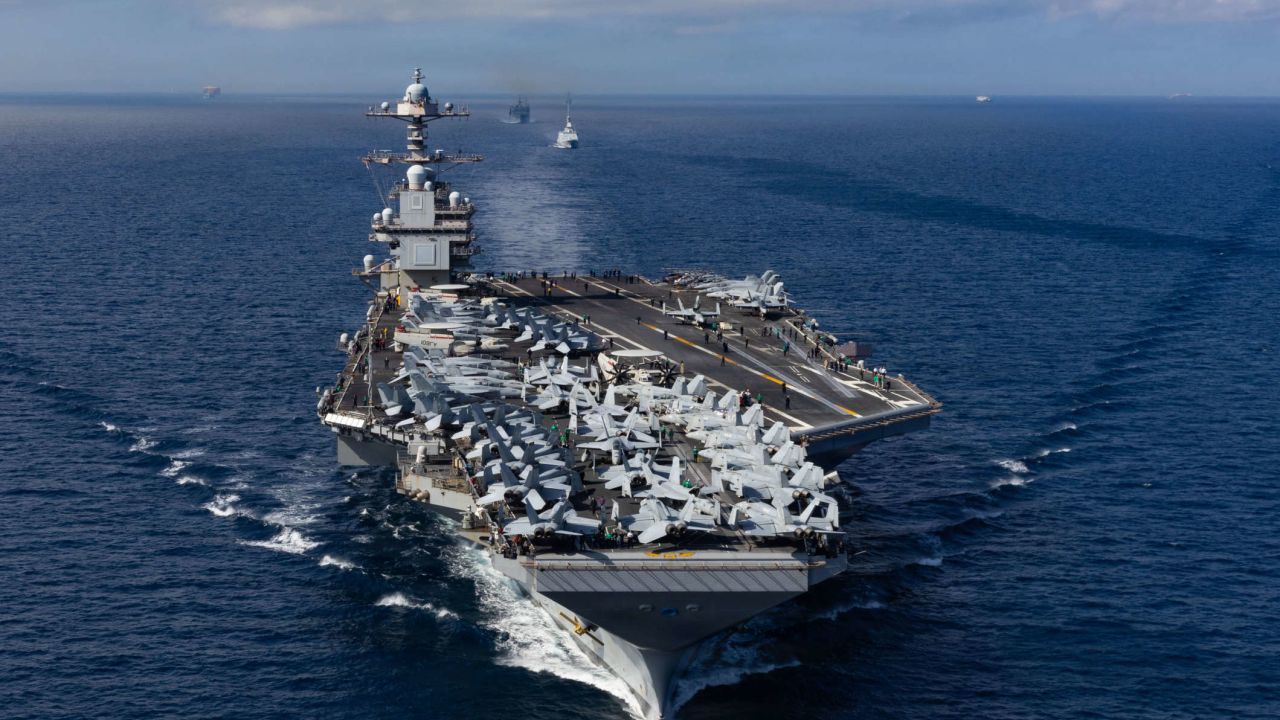 NATO F-44
What is JP-5 fuel?
JP-5 fuel (also searched as JP5 fuel or JP-5) is a high flash point kerosene aviation fuel specified by MIL-DTL-5624. NATO codes it F-44. The defining requirement is a minimum flash point of 60°C (140°F), materially safer than JP-8 / Jet A-1 (38°C) for carrier hangars, below-deck tanks and enclosed shipboard handling.
JP-5 fuel serves carrier air wings (fighters, AEW, helicopters) and land-based squadrons that must uplift carrier-grade fuel. The military additive package (CI/LI, FSII, SDA) mirrors JP-8 for corrosion, icing and static protection.
At 15°C, JP-5 fuel density is typically 0.788-0.845 kg/L (≈ 6.6-7.1 lb per US gallon). Exact batch density is confirmed on the Certificate of Analysis shipped with every lot, a common procurement check alongside flash point.
JP-5 vs JP-8 at a glance
| Property | JP-5 fuel (F-44) | JP-8 fuel (F-34) |
|---|---|---|
| Primary use | Carrier & naval aviation | Land bases / Single Fuel Concept |
| Flash point | min 60°C | min 38°C |
| Freeze point | max −46°C | max −47°C |
| Density @ 15°C | ≈0.788-0.845 kg/L | 775-840 kg/m³ |
| Spec | MIL-DTL-5624 | MIL-DTL-83133 |
Need land-base Single Fuel Concept? See JP-8 fuel (F-34).
JP-5 fuel specs & density
Certified to MIL-DTL-5624 / NATO F-44, the carrier-safe aviation fuel standard.
| Property | JP-5 limit |
|---|---|
| Specification | MIL-DTL-5624 |
| NATO code | F-44 |
| Flash point (min) | 60°C (140°F) |
| Freeze point (max) | −46°C (−51°F) |
| Density at 15°C | 0.788-0.845 kg/L (typical) |
| Net heat of combustion (min) | 42.6 MJ/kg |
| Total sulfur (max) | 0.30% mass |
| Aromatics (max) | 25% vol |
| Viscosity at −20°C (max) | 8.5 cSt |
| Additives | CI/LI + FSII + SDA (military package) |
Where JP-5 fuel fits
High flash point cuts fire risk in enclosed hangar bays and below-deck storage.
F/A-18, E-2, MH-60 and other carrier-based fixed and rotary-wing types.
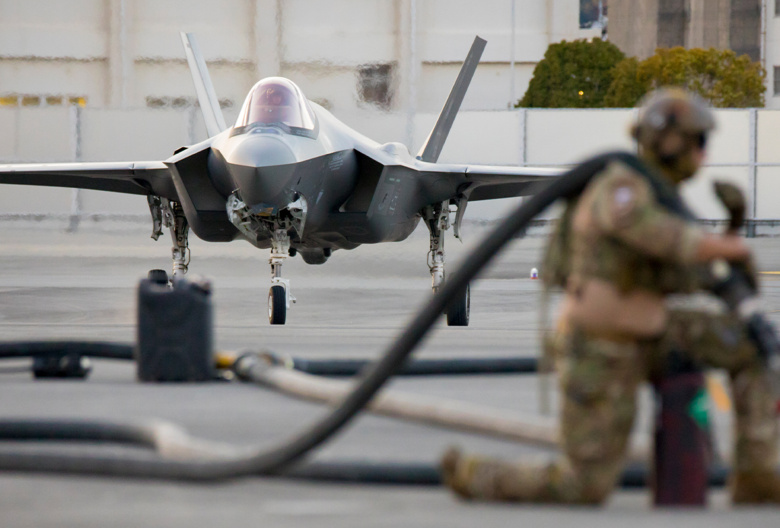
Also used by land-based squadrons where carrier-grade fuel is required.
CI/LI, FSII and SDA mirror JP-8 for corrosion, icing and static protection.
Quality & additives
Corrosion / lubricity
Protects tanks and pumps in the salt-air shipboard environment.
Icing inhibitor (DiEGME)
Prevents ice crystal formation during high-altitude carrier sorties.
Static dissipater
Safe high-speed fueling during rapid flight deck turnarounds.
How to buy
-
Share the requirement
Volumes, destinations and delivery window so we can qualify the purchasing profile.
-
Offer & terms
Pricing, Incoterms and supply scenarios aligned with compliance needs.
-
Allocate & schedule
Confirm allocation, lock liftings and delivery windows.
-
Ship with CoA
Product moves with certificates and shipment docs for full traceability.
Specs first? Download the TDS above. Ready to procure? Operations handles confidential defense requests.
Global sourcing network
Long-term procurement with distributor routes, refinery-backed planning and compliant documentation, from qualified producers and terminals to reduce lead-time risk.
- Continuity: Contracted volumes with rolling delivery windows.
- Flexibility: Multi-region options when one corridor is disrupted.
- Coverage: Partners for priority uplift and transfer.
- Compliance: Spec, quality and chain-of-custody docs.
Frequently asked questions
What is JP-5 fuel?
JP-5 fuel (JP5 / JP-5) is a high flash point kerosene aviation fuel to MIL-DTL-5624. NATO designates it F-44. It is built for carrier flight decks and enclosed-ship storage where fire safety requires a minimum 60°C flash point.
What is JP-5 fuel density?
JP-5 fuel density at 15°C is typically 0.788-0.845 kg/L. Exact batch density is reported on the Certificate of Analysis.
What is the flash point of JP-5?
Minimum 60°C (140°F) per MIL-DTL-5624, the highest of any standard jet fuel, for carrier fire safety.
JP-5 vs JP-8, what is the difference?
Flash point: 60°C vs 38°C. JP-5 fuel = carrier aviation (F-44); JP-8 fuel = land bases (F-34).
JP-5 vs JP-4?
JP-4 (F-40) is a wide-cut, more volatile legacy grade largely retired for safety. JP-5 fuel is the modern high-flash carrier kerosene; choose JP-5 for naval aviation programs.
What is F-44?
F-44 is the NATO STANAG code for JP-5 carrier-grade aviation fuel.
What is JP-5 fuel used for?
JP-5 fuel powers carrier air wings, fighters, AEW aircraft and helicopters, plus land-based squadrons that must uplift carrier-grade fuel. It is the Navy’s high-flash aviation kerosene for flight-deck and shipboard safety.
Does the navy still use JP-5?
Yes. JP-5 (NATO F-44) remains the carrier-grade aviation fuel for shipboard aviation where a ≥60°C flash point is required. Ashore, some programs uplift JP-8 / F-24; on carriers and enclosed ship storage, JP-5 is still the safety standard.
How much does 1 gallon of JP-5 weigh?
At 15°C, JP-5 fuel density ≈ 0.788-0.845 kg/L, so one US gallon weighs roughly 6.6-7.1 lb (≈3.0-3.2 kg). Exact weight depends on batch density on the CoA.
Is JP-5 the same as diesel?
No. JP-5 is a kerosene-type aviation turbine fuel. Naval ship diesels and gas turbines typically burn F-76 distillate, not JP-5. Cetane, distillation and use-cases differ.
Where can I buy JP-5 fuel?
Suat Fuels supplies JP-5 fuel for qualified naval and defense programs worldwide, request a confidential quote with volumes, port/base and delivery window. Retail pump sales are not offered.
Secure your JP-5 fuel supply
MIL-DTL-5624 / NATO F-44 certified JP-5 fuel for carrier and naval aviation programs.